
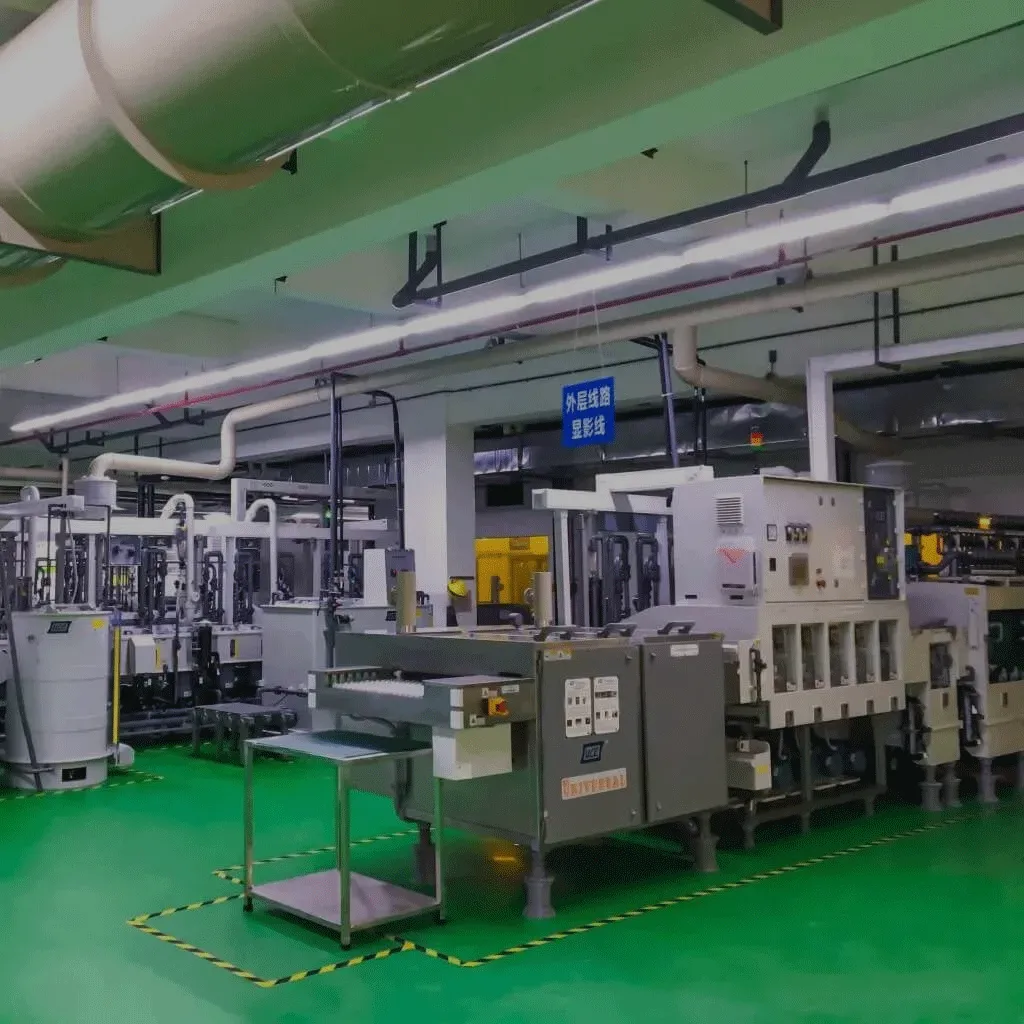
Short answer: "One-stop EMS" should mean one company owns bare board, parts, assembly, harness, test and box build — with one schedule and one quality record. Many suppliers using the phrase subcontract most of it. Verify stage by stage, and verify with a single RFQ.
Almost every contract manufacturer in Shenzhen describes itself as one-stop. The phrase costs nothing to put on a website, and there is no certification body that audits it. What varies enormously is what sits behind it: some suppliers genuinely run fabrication, procurement, assembly and test as one operation with one production plan; others are sales offices that forward your Gerbers to a board house, your BOM to a broker, and your kit to a nearby SMT shop, then re-badge the invoice. Both quote the same job. Only one of them can actually control your schedule. This article is a verification method, not a pitch — a set of stage-by-stage checks, questions and a single-RFQ test you can run on any supplier, including us.
Why does "one-stop" mean so little on a supplier website?
The term has no definition and no threshold. A supplier that outsources 80% of the process chain and a supplier that outsources none can both write it truthfully in their own minds, because "one-stop" is describing the customer's experience — one contact, one PO, one invoice — rather than the production reality. Single-invoice convenience is real value, and for a small prototype order it may be all you need. But it is a different product from integrated manufacturing, and it fails in a different way when something goes wrong.
The failure mode matters more than the label. When an integrated supplier has a problem, it reschedules internally and tells you a new date. When a coordinator has a problem, it has to negotiate with the vendor that caused it, and you find out late because the bad news has to travel two hops before it reaches you. Buyers rarely discover which kind of supplier they hired during the quote. They discover it the first time a schedule slips or a batch fails inspection.
What does a genuine one-stop EMS actually own?
Working backwards from a finished, boxed, tested product, the chain has seven stages. A supplier is one-stop to the extent that it controls each one — and "controls" means it can change the schedule, hold a lot, and answer a root-cause question without making a phone call to a third party.
- Bare board fabrication — the physical PCB, its stack-up, drilling, plating and surface finish.
- Component procurement — buying parts, choosing channels, and screening what arrives.
- SMT assembly — paste printing, placement, reflow and automated inspection.
- Through-hole and selective soldering — connectors, transformers, anything not reflowable.
- Wire harness and cable assembly — the parts of the product that are not on a board.
- Test — electrical test, functional test, fixtures and test programmes.
- Box build — enclosure, final assembly, labelling, packaging.
Very few suppliers of any size own all seven under a single roof in the literal sense, and demanding that is not the point. Some stages are legitimately performed at affiliated plants or long-standing partner sites. The distinction that matters is whether the supplier is accountable for a stage — plans it, controls its quality records, and absorbs its problems — or merely passes it along. A supplier that says "our second plant does that, here is how we schedule between them" is being straight with you. A supplier that says "yes we do that" and then cannot describe the process is not.
How do you tell integrated manufacturing from relabelled subcontracting?
Each stage leaves different fingerprints depending on whether it is run in-house or bought in. The right-hand column is the question that forces a real answer, because it asks for a specific, checkable detail rather than a yes.
| Stage | What in-house looks like | What subcontracting looks like | How to ask it out |
|---|---|---|---|
| Bare board fabrication | DFM feedback names specific stack-up, aspect-ratio and annular-ring constraints tied to their own process limits | DFM comes back as a generic checklist, days late, with no stack-up proposal | "What is your maximum aspect ratio and minimum inner-layer line/space, and which of my vias are outside it?" |
| Component procurement | Line-by-line BOM feedback on lifecycle, lead time and alternates; a named channel policy and a documented incoming-inspection step | A single lump material price, no per-line commentary, vague answers on where parts come from | "Which lines on my BOM are the long poles, and what channel will each be bought through?" |
| SMT assembly | They quote against their own placement, pitch and board-size limits, and flag your parts that sit near them | No comment on your 0.4 mm BGA or your oversized panel until after the PO | "What is the finest pitch and largest board your lines run, and where does my design sit against that?" |
| Through-hole & selective solder | They state whether your THT parts go wave, selective or hand, and price accordingly | THT is described as "no problem" with no method named; often it goes to a second shop | "Which of my through-hole parts are wave-soldered, which are selective, which are hand-soldered?" |
| Wire harness | A workmanship standard and class is named, crimp tooling and connector families are discussed, samples turn fast | Harness is quoted separately with a much longer and vaguer lead time than the boards | "What workmanship standard and class do you build harnesses to, and how is each one tested?" |
| Test | They ask for your test spec early, quote fixture build time, and state coverage targets | "AOI and testing included" with no coverage figure, no fixture lead time, no report format | "Who builds the fixture, how long does it take, and what coverage will the test achieve?" |
| Box build | They ask about enclosure supply, labelling, serialisation and packaging before quoting | Box build appears as one line with a round number and no questions asked | "Who supplies the enclosure, and what does your final-assembly work instruction cover?" |
None of these questions are hostile, and none of them require you to reveal that you are testing. They are all questions an engineer would legitimately ask. What you are watching is not the content of the answer so much as its specificity and latency. In-house capability produces fast, concrete, slightly opinionated answers. Brokered capability produces answers that arrive the next day and repeat your own words back to you.
Why is the cost of a multi-vendor chain invisible on the quote?
Compare three quotes from a board house, a broker and an assembler against one integrated quote and the split chain often looks cheaper. It usually is cheaper on the line items, because each vendor is quoting only its own step and none of them is pricing the seams. The seams are where the money goes, and they never appear on any of the three documents.
The first cost is coordination labour. Somebody on your side becomes the programme manager: chasing the board house for a ship date, telling the assembler when to expect boards, re-explaining the same ECO three times. That person is usually your hardware engineer, and the hours come out of design work. The second is duplicated incoming inspection — every hand-off re-verifies what the previous vendor already verified, or worse, nobody does because each assumes the other did. The third is queue time. Three vendors mean three production queues, and your job waits at the back of each one; a chain of three five-day queues is fifteen days of calendar time even if every vendor hits its quoted lead time perfectly.
The fourth and largest is diagnostic time on failure. When a board fails functional test in a split chain, the question "is this a bare-board defect, a counterfeit part, or a soldering defect?" has no owner. The assembler blames the laminate, the board house blames the reflow profile, the broker blames neither because it has already been paid. Getting to root cause requires cross-sections, X-ray and dated process records that live in three different companies — and in practice, many teams give up and rebuild the batch instead. Our guide to how PCBA cost is built up in China covers the direct cost side; these four are the ones you only see afterwards.
| Hidden cost | Where it lands | Why the quote never shows it |
|---|---|---|
| Coordination and chasing | Your engineering headcount, not the BOM | It is your labour, so no supplier prices it |
| Duplicated incoming inspection | Each vendor's overhead, passed through in unit price | Buried in margin, never itemised |
| Queue time at each hand-off | Calendar, not cash — until it delays revenue | Each vendor quotes only its own lead time |
| Root-cause investigation | Weeks of engineering time, often a scrapped batch | Priced as zero because nobody expects failure |
| Freight between vendors | Real invoices, usually excluded from comparison | Ex-works terms make it someone else's line item |
| Re-qualification when you scale | A new supplier audit and first-article cycle | It happens six months after the quote was signed |
What should a one-stop coverage checklist actually contain?
Take the seven stages and turn them into a document. Send it as part of your RFQ and ask for written answers. A supplier that can fill this in without hedging is worth a factory audit; one that cannot is worth a smaller first order.
| Coverage item | Confirm in writing | Evidence that settles it |
|---|---|---|
| Bare board | Layer count, materials, minimum line/space, hole size, finishes, impedance tolerance, prototype turn time | A published capability table you can hold them to, plus a stack-up proposal for your design |
| Procurement | Sourcing channel policy, traceability, incoming inspection method, shortage handling, turnkey and consignment options | A BOM review with per-line lead times and named alternates |
| SMT | Minimum component size and BGA pitch, placement accuracy, board size range, inspection steps, first-pass yield | Named limits plus a statement of where your design sits relative to them |
| Through-hole | Wave, selective or manual, and which of your parts go which way | A marked-up assembly drawing or a per-reference-designator note |
| Wire harness | Workmanship standard and class, wire gauge range, connector families, electrical test, sample lead time | A named standard and class, and a test record format |
| Test | Available methods, node coverage target, fixture build time, burn-in and environmental range, report delivery | A fixture quote with a date, and a sample test report |
| Box build | Enclosure sourcing, conformal coating or potting, labelling and serialisation, packaging and drop-test approach | A draft final-assembly work instruction, even a rough one |
Two columns are deliberately absent: price and promises. The checklist is designed to detect capability, not to negotiate. If you mix commercial pressure into the same email, you will get optimistic answers on both.
How can one RFQ tell you whether a supplier is really integrated?
You do not need an audit trip to run a first-order test. Send one enquiry that deliberately spans several stages at once — a small board with at least one fine-pitch part, a few through-hole connectors, a short harness, and a request for functional test — and then read the response as evidence rather than as a price.
An integrated supplier tends to answer with one document, one lead time built from internal stages, and cross-stage observations: a note that a connector choice affects selective soldering, or that the harness sample can be ready before the boards. A coordinator tends to answer in instalments, because each number has to come back from a different vendor, and the harness or test line will arrive a day or two after the PCBA price. Watch for a single consolidated schedule versus a stack of separate quotes stapled together, and for whether anyone comments on the interaction between your stages at all. Our list of questions to ask before outsourcing PCBA and the framework for choosing an EMS partner in China go deeper on scoring the answers; the file-level requirements are in what files a PCBA quotation needs.
When is one-stop the wrong answer?
One-stop is not universally superior, and pretending otherwise is how buyers end up disappointed. It is the wrong shape when you already own the capabilities it bundles.
A large OEM with a mature supply chain has negotiated component pricing that no EMS purchasing department will beat, an approved vendor list built over years, and a supplier quality team that can run a split chain competently. For that company, handing procurement to the assembler destroys pricing leverage and hides the supply base behind a middleman. Consignment or partial turnkey usually wins — see turnkey versus consignment PCB assembly for how the BOM gets split line by line.
One-stop is also the wrong answer when a stage genuinely requires specialisation the integrator does not have: exotic RF substrates, safety-critical qualification with a specific accredited scope, or a certification body's own test regime. And it can be the wrong answer when second-source resilience matters more than convenience — a single integrated supplier is a single point of failure, and some programmes are required to dual-source. The honest test is whether integration removes work you cannot do well, or removes control you would rather keep.
Where does one-stop pay off most?
The pattern is consistent: integration is worth most to teams that are small relative to the complexity of what they are building, and to programmes still changing shape. A five-engineer startup running its first build has no purchasing function, no supplier quality function, and no slack to spend chasing three vendors — the coordination cost lands directly on the person who should be writing firmware.
Integration also pays disproportionately during iteration. Between prototype and production a design changes repeatedly, and each change has to propagate through fabrication data, the BOM, the pick-and-place file and the test programme. Inside one company that propagation is a work-order revision. Across three vendors it is three email chains with three chances of a stale file reaching the floor. That is exactly why the EVT, DVT and PVT build stages are easier to run with one manufacturing partner: the same team carries what it learned at EVT into the PVT line rather than re-teaching a new supplier at every stage.
What should you audit once the paperwork checks out?
Written answers only get you to a shortlist. If the order matters, the next step is verification of a different kind: certificates with scope and expiry dates you can read, not logos on a page; a factory visit or a live video walk-through of the specific lines that will run your job; and a first article with real inspection records attached. Ask for the quality-system certificates by number and check what scope each one actually covers, because a certificate held by an affiliated plant does not automatically cover the line building your product. Then place a small paid order before a large one. A supplier's behaviour under a real PO tells you more than any audit checklist.
How does BELI's coverage check out against this list?
Run the checklist above against us rather than taking the label. PCB fabrication covers rigid, flexible, HDI and impedance-controlled boards up to 42 layers, with inner-layer line and space to 3.0/3.0 mil, impedance control of ±10%, DFM analysis included on every order, and quick-turn bare boards as fast as 24 hours for 1–2 layer designs or 3–7 working days for multilayer. Component sourcing runs through authorized distributors and original manufacturers with full traceability, original packaging preserved, and 100% visual inspection plus X-ray sampling on incoming parts; standard parts are typically available in 3–7 days, with spot-market reach for shortages, and both turnkey and consignment are supported with no fixed ratio.
PCB assembly covers SMT down to 0201/01005 and 0.4 mm BGA pitch at ±0.03 mm placement accuracy on boards from 45 × 45 mm to 680 × 500 mm, plus through-hole with wave and selective soldering, at a first-pass yield of ≥99.5% with AOI and X-ray on every order; quick-turn prototype assembly takes 48 hours once boards and parts are on site, and turnkey orders including sourcing typically run 2–3 weeks. Wire harness assembly is built to IPC/WHMA-A-620 Class 2 and Class 3 across AWG 28–10 with JST, Molex and TE connector systems, 100% continuity tested, samples in 1–2 days. Functional testing covers ICT at ≥95% node coverage, flying probe, functional test, burn-in up to 24 hours and environmental testing from −40 to +85 °C at 20–98% RH, with custom fixtures built in 2–3 working days and test reports delivered with every shipment. Value-added options after assembly include conformal coating, potting and complete box-build assembly. Full numbers are on the manufacturing capability page, and the manufacturing facilities behind them have over 15 years of operation under ISO 9001:2015, ISO 14001 and ISO 13485:2016.
If you are evaluating suppliers right now, the most useful thing you can do is send the same multi-stage enquiry to three of them, put the coverage checklist above in the same email, and compare how the answers come back. Send us your Gerber, BOM and pick-and-place files to start that comparison: quotes are returned within 24 hours on business days, and DFM analysis is included with every order.
Related reading: How to Choose the Right EMS Partner in China · Key Questions to Ask Before Outsourcing PCBA · Turnkey vs Consignment PCB Assembly