
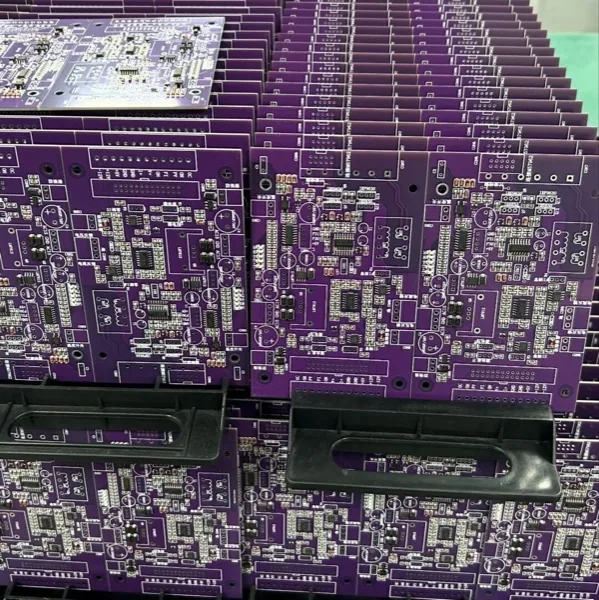
Short answer: Low-MOQ PCB assembly means the factory will build the quantity you actually need. At BELI there is no MOQ for prototypes, and small batches run on the same SMT lines as volume production. What limits a small build is rarely the assembler — it is component packaging minimums, one-time NRE, and panel economics.
"No MOQ" is one of the most repeated phrases in contract electronics, and one of the least examined. Engineers who take it at face value are surprised when a 20-board build still requires buying 5,000 resistors, or when a 30 mm square board gets quoted as a panel of twelve. None of that contradicts a no-MOQ policy — the assembler genuinely has no quantity floor, but several upstream and downstream steps do. This guide separates the constraints that are real from the ones that are negotiable, and shows how to structure a small run so it does not become an expensive dead end.
What Does "No MOQ" Actually Mean at a PCBA Factory?
Minimum order quantity is a commercial policy, not a physical limit. Volume-focused factories set high MOQs because every changeover costs them line time: feeders are unloaded and reloaded, a new stencil is mounted, the placement program is called up, and the first boards through are consumed proving the setup. If a line is booked with six-figure runs, a 25-board job is a net loss of capacity.
A prototype-friendly EMS makes a different trade. At BELI Technologies there is no MOQ for prototypes, and the same SMT lines carry a job from a handful of boards through to mass production — capacity across those lines runs to roughly 52 million placements per month, so a small job runs on the same equipment as volume work rather than on a separate prototype cell. The practical value of that is not the low quantity itself. It is that the stencil, the placement program, the inspection criteria and the test coverage you prove on 20 boards are the same ones that will build 20,000, so nothing needs requalifying when you scale. Our turnkey PCB assembly service is built around that continuity.
What "no MOQ" does not mean: that a small build costs the same per unit as a large one, that every component can be bought in the exact quantity you need, or that a board of any outline can be run as-is. Those are separate constraints, covered below.
Low Volume vs Low MOQ: Are They the Same Thing?
These two terms get used interchangeably and they are not the same. The distinction matters when you are comparing suppliers.
Low MOQ describes the supplier's policy — the smallest order they will accept. It is a threshold question with a yes or no answer.
Low volume describes your production regime — you build in the tens or low hundreds, repeatedly, as an ongoing business, not as a one-off validation exercise. Industrial instrumentation, medical devices, broadcast equipment, laboratory hardware and capital-equipment sub-assemblies live here permanently.
A supplier can have a low MOQ and still be a poor low-volume partner: happy to take your 50-board order once, but treating every repeat as a new setup, with no retained programs, no held fixtures, and no stable pricing. Conversely, a supplier with a nominal MOQ of 100 units may be an excellent low-volume partner if they retain your stencils and test fixtures, keep the placement program on file, and re-run the job in days.
Small batch is the loosest of the three and generally means a build somewhere between prototype and production — a pilot run, a DVT or PVT build, a first commercial batch. If you build in this range, ask about repeat-order handling and tooling retention, not just about the minimum. See EVT, DVT and PVT build stages for how these builds are normally sequenced.
How Cost Structure Shifts Across Quantity Tiers
The most useful thing to understand about small-batch pricing is that the composition of the invoice changes with quantity, not just the total. The table below describes that structural shift. The relative index in the last column is illustrative and structural, not BELI pricing — it exists to show the shape of the curve, and real numbers depend entirely on your BOM, board and test scope.
| Quantity tier | What dominates the invoice | Component pricing position | Excess parts bought | Relative unit cost (volume run = 1.0, illustrative) |
|---|---|---|---|---|
| 1–10 boards | One-time NRE: stencil, program, setup, DFM | Cut tape or single-piece, worst tier | Very high — most of every pack is unused | 5x–8x |
| 10–100 boards | NRE still material; setup time per board high | Small-pack pricing, first distributor break | High — reels of passives still barely touched | 2x–3x |
| 100–1,000 boards | Balanced: NRE thinning, BOM taking over | Mid-tier breaks reached on most lines | Moderate — passives now largely consumed | 1.3x–1.6x |
| 1,000–10,000 boards | BOM dominates; NRE nearly invisible | Volume tiers; alternates worth qualifying | Low — ordering to demand, not to pack size | 1.05x–1.15x |
| 10,000+ boards | BOM plus line throughput; cycle time matters | Contract pricing, scheduled deliveries | Minimal | 1.0 (baseline) |
Two readings follow from this. First, the steepest part of the curve is between single-digit and low-hundred quantities — which is exactly where most validation builds sit, and exactly why a prototype quote looks alarming next to a projected production cost. Second, above roughly a thousand units, further savings come from the BOM rather than from the assembly line, which is a different negotiation entirely. The five cost blocks behind these numbers are broken out in how a China PCBA quote is built.
Why NRE Weighs So Heavily on a Small Batch
Non-recurring engineering is the set of costs incurred once per design, independent of quantity: stencil fabrication (one per soldered side), placement program creation, feeder setup and line changeover, DFM engineering, first-article inspection, and any dedicated test fixture. Build five boards and you carry the whole of that on five units. Build five thousand and the same total lands on five thousand.
Three things follow that are worth acting on. NRE is charged per design revision, not per order, so three respins in a quarter means paying it three times — batching design changes into fewer revisions is real money. It is also charged per side for stencils, so a layout that keeps everything on one side of the board is cheaper to set up as well as faster to build. And it should always appear as a separate line on the quotation; if a supplier folds NRE into the unit price, a small-quantity quote becomes impossible to compare against anyone else's. The full arithmetic of NRE amortisation, worked through with clearly labelled illustrative figures, is in prototype vs mass production cost.
Which Process Steps Carry a Minimum, and Which Do Not
This is the table most engineers actually need. "MOQ" is not one number; it is a set of independent constraints, each with its own workaround.
| Process step | Quantity minimum? | What sets the floor | Small-batch approach |
|---|---|---|---|
| Bare PCB fabrication | No MOQ for prototypes | Panel economics, not policy | Accept the panel quantity and keep the spares as rework stock |
| Stencil | None | One per soldered side, per revision | Single-sided layouts halve it; confirm who owns the stencil |
| SMT placement | None | Setup and changeover time, charged as NRE | Group revisions; run related boards in one setup window |
| Board outline on the SMT line | Hard physical floor | Minimum handled board size is 45 x 45 mm | Panelise smaller boards with rails and V-scoring or tabs |
| Component purchase | Yes — the real constraint | Distributor MPQ / SPQ and packaging format | Cut tape where available; accept overage on cheap passives |
| Through-hole soldering | None | Wave pallets are worth making only at volume | Selective soldering covers low quantities without a dedicated pallet |
| AOI and X-ray | None | Programmed per design, run on every order | No change needed — baseline inspection either way |
| ICT / functional test fixture | Economic, not technical | Fixture build cost against run length | Flying probe covers prototypes and small batches without a fixture |
| Wire harness | None | Crimp tooling per connector family | Samples first, then batch; every assembly continuity tested |
| Conformal coating / potting | Runs as a value-added step on the assembly order | Masking labour per board | Manual masking at low quantity; design keep-out zones early |
Note the pattern: almost nothing on the assembly side imposes a quantity floor. Two entries do constrain you — the 45 x 45 mm minimum board size, which is a machine-handling reality, and component packaging, which belongs to the distributor rather than the factory. On the test side, the choice is economic: BELI builds custom ICT and functional fixtures in 2 to 3 working days with ICT node coverage of 95% or better, but for a genuinely small batch, flying-probe testing avoids the fixture cost entirely. Details of both routes are on the functional testing and ICT page.
MPQ: The Component Minimum That Really Sets Your Floor
Minimum packaging quantity (sometimes standard packing quantity) is the smallest unit a distributor will sell a part in. It is set by how the manufacturer packages the component, and it is the single most common reason a small build costs more than expected. Typical figures, which vary by manufacturer and distributor:
| Packaging format | Typical parts per pack | Small-batch implication |
|---|---|---|
| Full reel, 0402 / 0603 passives | 2,000–10,000 | Cheap per part, but you buy a lifetime supply for one build |
| Cut tape from a reel | 10–500 | Best small-run option; higher unit price, needs a splice or hand load |
| Tube (SOIC, connectors, some ICs) | 25–100 | Convenient quantity, but tube feeders take longer to set up than tape |
| Tray (BGA, QFP, large ICs) | 20–100 | Moisture-sensitive parts need bake and controlled handling once opened |
| Bulk / bag | Varies | Usually cannot be machine-fed, so expect extra manual handling and setup time |
Two practical consequences. First, a 0402 capacitor whose per-piece cost is negligible still carries a full-reel minimum, so a 20-board build can end up holding thousands of spares on dozens of line items — normal, and rarely worth fighting. Second, packaging format affects assembly, not just purchasing: tape-and-reel feeds fastest, tubes and trays need different feeders, and bulk parts usually mean hand placement. When a BOM is quoted, ask which lines are only available in bulk or in awkward pack sizes, because those are the lines that drive setup time up on a small run. BELI's component sourcing from authorized distributors and original manufacturers covers standard parts in 3 to 7 days, with 100% visual inspection plus X-ray sampling on incoming material, and consignment or turnkey with no fixed ratio — so you can hand over the awkward lines and buy the rest yourself if that suits your cash flow.
End-of-Life Risk Bites Harder in Small Batches
Low-volume products often stay in production for years, which means their BOMs outlive several component life cycles. The risk profile is the opposite of a high-volume consumer product: you are not exposed to allocation during a demand spike, you are exposed to quiet obsolescence between orders. A part that was fine on last year's build is not stocked this year, and because you buy in small quantities you have no leverage and no contractual supply.
Three habits keep this manageable. Run a lifecycle check on the BOM at every build, not only at design time, so you catch a not-recommended-for-new-designs status while alternatives still exist. Qualify a second source for anything critical during the design phase, when a footprint change is free. And when a part does go end-of-life, decide deliberately between a last-time buy and a redesign rather than drifting into a shortage. BELI's purchasing team flags risky lines during BOM review and can reach the spot market for hard-to-find or end-of-life components; the approach to substitutions, always with written client approval, is described in cutting BOM costs without cutting corners.
Panel Utilisation: How Your Board Outline Changes the Bill
Bare boards are not manufactured individually — they are imaged, drilled and plated on a production panel and separated afterwards. BELI fabricates on panels up to 18 by 24 inches, and the cost that matters is how much of that panel your board actually uses. An outline that tiles efficiently might yield forty boards per panel; the same area with an awkward shape or an unnecessarily generous outline might yield twenty-eight. At volume that difference is a line item in a cost-reduction review. On a small batch it can decide whether you pay for one panel or two.
Panelisation also solves the minimum board size problem. Boards below 45 x 45 mm cannot be handled individually on the SMT line, so they are assembled in an array with breakaway rails carrying tooling holes and fiducials, then depanelised by V-score or routed tabs after assembly. Design the array early: the rails need enough width for conveyor edge clearance, and components too close to a V-score line risk cracking at depanelisation. A DFM review — included with every order at BELI, prototype or production — catches these before boards are cut, alongside the usual footprint and annular-ring checks. Materials, finishes and stack-up options for the bare boards themselves are on the PCB fabrication service page.
Common Small-Batch Mistakes Worth Avoiding
- Ordering exactly the quantity you need. Build in a small overage. Boards get destroyed in bring-up, cut for cross-sections, sent to a test lab, or sacrificed to a firmware bug. Adding 10% to a 30-board run costs little; a second run costs the whole NRE again.
- Comparing a turnkey quote to a consignment quote. One includes components and one does not. This is the single most common apples-to-oranges error in supplier comparison.
- Sending an incomplete file package. Missing manufacturer part numbers, no pick-and-place file, or an unstated board revision costs days of clarification. Delays hurt small runs disproportionately, because the schedule, not the unit price, is usually why you chose a small run.
- Changing the design between quote and build. A revision after quoting can invalidate the stencil, the program and part of the BOM. Freeze, then order.
- Choosing a prototype-only shop. If your assembler cannot scale, you pay for requalification later — new supplier, new fixtures, new yield ramp — at the moment you can least afford the delay.
How to Structure a Small Batch So It Scales
Treat the first small build as the beginning of a production process rather than a one-off purchase. Concretely, that means agreeing four things with your assembler up front: that the pilot runs on the same lines and processes as future volume; that stencils, fixtures and placement programs are retained and that you own the tooling you paid for; that first-pass yield and a defect breakdown are reported after each run, not just a pass or fail; and that any component substitution requires your written approval.
Timing is the other half. Quick-turn prototype assembly at BELI takes 48 hours once boards and components are in hand, while a turnkey order that includes sourcing typically runs 2 to 3 weeks — the difference is procurement, not the line. Bare boards move faster still: as quick as 24 hours for 1 to 2 layer boards and 3 to 7 working days for multilayer. Plan your build calendar around the sourcing window, because that is what actually sets the date. Small batches run under the same controls as volume work, with AOI and X-ray on every order and first-pass yield held at 99.5% or better.
What to Send for a Small-Batch Quotation
A small batch is quoted from the same package as a volume run: Gerber or ODB++ for the boards, a BOM with manufacturer part numbers — plus a note of which packaging you can accept per line, since cut tape versus full reel is where most small-batch surprises live — and a pick-and-place file. Our guide to the files required for a PCBA quotation lists what each one must contain. Add the quantity you actually need plus the overage you want built, whether the order is consignment or turnkey, and the acceptance class for the assembly. When the package is ready, send it through the contact form; the DFM review comes back with anything that would hold the build up.
If you have a low-MOQ or small-batch build coming up, send us your Gerber, BOM and pick-and-place files. We sign an NDA before you share anything, return an itemised quotation within 24 hours, and include a DFM review with every order — and the same lines that build your 20-board pilot will build your production run.
Related reading: Prototype PCBA in China: A Practical Guide · Turnkey PCB Assembly for Startups